
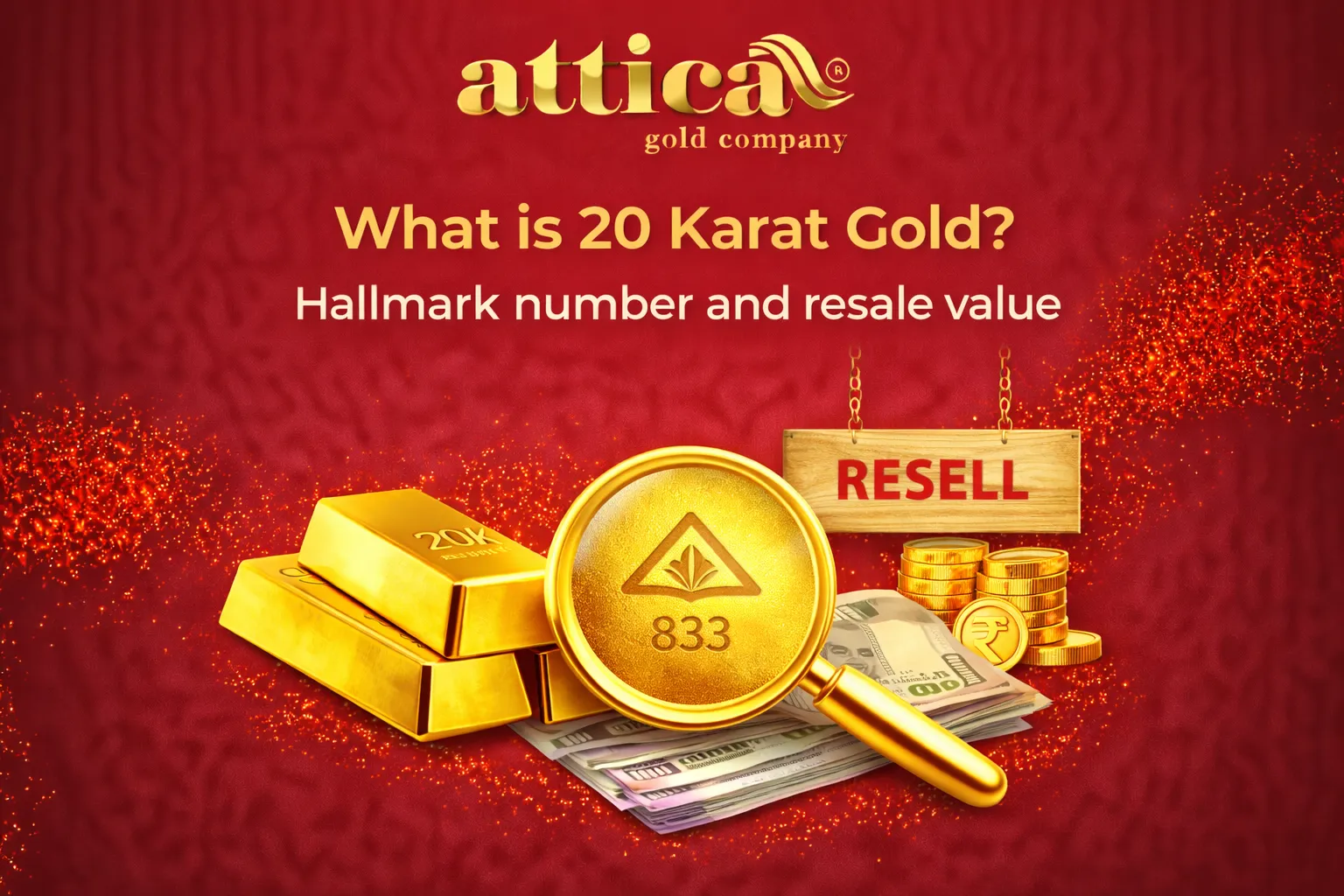
Gold purity directly affects durability, appearance, price, and resale value. While most buyers are familiar with 22K and 24K gold, 20 Carat Gold, also known as 20K Gold, is gaining attention for its balance between high gold content and enhanced strength. It sits comfortably between traditional jewellery gold and lower-purity designer gold.
- Also Read: Live Gold Price Today
Understanding what 20K Gold means, how it is hallmarked, and where it fits in the gold purity spectrum helps buyers make smarter purchasing and resale decisions. This guide explains 20 Carat Gold in detail, focusing on purity, characteristics, hallmarking, and practical usage.
What Is 20 Carat Gold?
20 Carat Gold (20K Gold) is a gold alloy that contains 83.33% pure gold, with the remaining 16.67% composed of alloy metals such as copper, silver, or zinc. Gold purity is measured on a 24-part scale, and 20 carats indicate that 20 out of 24 parts are pure gold.
This composition makes 20K Gold significantly stronger than higher-purity gold while still retaining a rich gold appearance and substantial intrinsic value.
Definition Overview of 20 Carat Gold
- Gold Content: 83.33% pure gold
- Alloy Content: 16.67% strengthening metals
- Purity Classification: High-purity gold alloy
- Common Name: 20K Gold
- Primary Usage: Jewellery and ornaments
Why 20 Carat Gold Exists in the Gold Market
Pure gold is naturally soft. As purity increases, durability decreases. The purpose of introducing 20 Carat Gold is to create a balance between gold richness and structural strength, especially for jewellery meant for regular wear.
20K Gold exists in the market because it:
- Offers better durability than 22K and 24K gold
- Supports intricate jewellery designs more effectively
- Reduces deformation, bending, and scratch damage
- Costs less than higher-purity gold while retaining strong value
This balance makes 20 Carat Gold particularly suitable for buyers prioritising longevity over maximum purity.
Physical Characteristics of 20 Carat Gold
20K Gold has distinct physical properties that differentiate it from both higher and lower karat gold.
- Colour: It displays a warm yellow tone that is slightly less intense than higher-purity gold due to the presence of alloy metals.
- Strength: The alloy composition increases hardness, helping it resist bending, dents, and surface scratches more effectively.
- Weight: It weighs slightly less than higher-karat gold of the same volume because it contains less pure gold.
- Finish: It maintains a smooth and lustrous finish, making it suitable for premium jewellery designs.
- Workability: Jewellers find it easier to mould into complex designs without compromising structural integrity.
Is 20 Carat Gold Considered Pure Gold?
20 Carat Gold is classified as high-purity gold, but it is not considered pure gold in technical terms. Pure gold is defined as 24 carat or 99.9% purity.
Key points to understand:
- 20K Gold contains more gold than 18K but less than 22K
- It retains strong intrinsic value due to high gold percentage
- It is not used for investment bullion like bars or coins
- Its value includes both gold content and craftsmanship
Therefore, 20 Carat Gold is best suited for jewellery rather than pure investment purposes.
What Is the Hallmark Number for 20 Carat Gold?
Hallmarking certifies gold purity and protects buyers from fraud. In India, hallmarking is regulated by the Bureau of Indian Standards (BIS).
The hallmark number for 20 Carat Gold is:
- 833
This number signifies that the gold contains 83.3% pure gold, which corresponds exactly to 20K Gold on the carat scale.
Mandatory BIS Hallmark Components on 20K Gold
A genuine BIS-certified 20 Carat Gold item includes multiple hallmark elements to confirm authenticity.
- BIS Logo: Confirms that the gold has been certified under Bureau of Indian Standards regulations.
- Purity Mark (833): Indicates the gold contains 83.33% pure gold, officially classifying it as 20K Gold.
- Assaying and Hallmarking Centre Mark: Identifies the BIS-authorised laboratory that verified purity using scientific methods.
- Jeweller or Manufacturer Identification: Reveals the registered jeweller responsible for selling or manufacturing the gold.
- Year of Hallmarking Code: Indicates the year the gold was tested and certified, helping buyers assess certification validity.
How to Identify Genuine 20 Carat Gold
Authentic 20K Gold can be identified through both certification and physical traits.
- Hallmark Verification: Look for BIS logo and purity mark 833.
- Colour Observation: Expect a rich yellow shade that is slightly softer than 22K gold.
- Weight Comparison: Slightly lighter than higher-karat gold jewellery of similar size.
- Professional Testing: Reputed gold buyers use XRF testing to confirm purity accurately without damaging jewellery.
- Invoice Confirmation: Purchase bills should clearly mention “20 Carat Gold” or “20K Gold.”
Common Uses of 20 Carat Gold
20 Carat Gold is primarily chosen for jewellery that requires both beauty and durability.
- Everyday Jewellery: It is commonly used for rings, chains, bangles, and earrings because the added alloy metals provide durability, allowing jewellery to withstand daily wear and frequent handling.
- Heavy Jewellery Designs: It is suitable for thick ornaments and layered jewellery pieces because its improved hardness helps maintain shape and prevents bending during long-term usage.
- Stone-Studded Jewellery: It is widely used for gemstone jewellery because the stronger alloy structure holds diamonds and other stones securely without loosening during regular wear.
- Cultural Ornaments: It is often used in traditional jewellery where ornaments are worn frequently during cultural events and ceremonies rather than being stored purely for investment.
- Custom Jewellery: Jewellers prefer it for personalised designs because the alloy composition supports detailed craftsmanship and allows complex patterns to be created without damaging structure.
- Wedding Jewellery: It is used in certain wedding ornaments because it balances durability and appearance, allowing intricate bridal jewellery pieces to maintain form during long celebrations.
- Decorative Jewellery Pieces: It is suitable for decorative ornaments with artistic patterns since the stronger structure allows engraving, carving, and design detailing without compromising durability.
- Long-Term Wear Jewellery: It is chosen for jewellery meant for frequent and long-term use because the added metals reduce bending and scratches while preserving an attractive gold appearance.
20 Carat Gold vs Other Gold Purities (Overview)
| Gold Purity | Gold Content | Durability | Typical Use |
| 24K | 99.9% | Very Low | Bars, coins |
| 22K | 91.67% | Moderate | Traditional jewellery |
| 20K | 83.33% | High | Jewellery |
| 18K | 75% | Very High | Designer jewellery |
This comparison shows how 20K Gold bridges the gap between purity and practicality.
Is 20K Gold a Good Choice for Buyers?
20 Carat Gold is suitable for buyers who:
- Want Jewellery Stronger Than 22K Gold: Buyers who want jewellery that is stronger than 22K gold often choose it because the added alloy metals improve durability and resistance to bending.
- Prefer Durability Over Maximum Purity: It is suitable for buyers who prioritise durability and structural strength in jewellery rather than focusing only on achieving the highest possible gold purity.
- Seek Lower Cost Than Higher-Karat Gold: Many buyers choose it because it offers a lower purchase cost compared to higher-karat gold while still maintaining relatively high gold content.
- Plan Long-Term Wear Rather Than Short-Term Resale: It is ideal for buyers who intend to wear jewellery regularly over long periods instead of purchasing gold primarily for short-term resale or investment purposes.
However, for bullion investment or highest resale efficiency, higher-purity gold may be more suitable.
What Is the Resale Value of 20 Carat Gold?
The resale value of 20 Carat Gold depends primarily on its gold purity, current market price, and overall condition. Since 20K Gold contains 83.33% pure gold, its resale value is lower than 22K or 24K gold but higher than 18K gold.
When selling 20K Gold jewellery, buyers evaluate only the gold content, not the design or emotional value. This makes understanding resale dynamics essential before purchasing.
How Is the Resale Value of 20K Gold Calculated?
Gold buyers follow a systematic and transparent process to calculate the resale value of 20 Carat Gold.
- Live Gold Market Rate: The current 24K gold rate is used as a reference, then adjusted proportionally to 83.33% purity.
- Net Gold Weight: Only the weight of the gold portion is considered, excluding stones, clasps, or non-gold components.
- Purity Percentage: Since 20K Gold equals 83.33% purity, buyers multiply weight by this factor during valuation.
- Hallmark Verification: BIS-hallmarked 20 Carat Gold receives quicker and more accurate valuation.
- Stone Deduction: If jewellery contains gemstones, their weight is deducted from the total weight before valuation.
- Testing Method Used: XRF testing ensures accurate purity assessment without damaging jewellery.
- Local Market Competition: Cities with more organised gold buyers may offer slightly better resale rates.
Does 20 Carat Gold Have Deductions During Resale?
Yes, 20K Gold resale involves certain deductions, mainly because it is jewellery-grade gold.
Common Deductions Applied
- Making Charges Deduction: The making charges paid during the purchase of jewellery are not included in resale value. Buyers calculate payment only based on the gold content weight.
- Stone and Gem Weight Removal: When jewellery contains gemstones, diamonds, or other decorative materials, their weight is deducted from the total before calculating the value of the gold.
- Purity Adjustment: Buyers calculate value based only on the actual gold purity. Since it contains about 83.33% pure gold, payment is made only for that gold portion.
- Melting or Processing Charges: Some buyers apply small processing or melting fees if the jewellery needs to be melted to verify purity or convert it into raw gold.
- Non-Hallmarked Jewellery Discount: If the jewellery does not carry a BIS hallmark, buyers may apply additional deductions because purity cannot be verified easily.
- Condition and Wear Deduction: Jewellery that is damaged, heavily worn, or altered may receive a slightly lower valuation because it may require refining or repair before resale.
What Is NOT Deducted
- Age of Jewellery: Old and new 20K Gold carry similar value if purity is unchanged.
- Surface Wear: Scratches or dents do not significantly affect value, as gold is melted.
20 Carat Gold vs 22K Gold vs 24K Gold (Resale Comparison)
| Factor | 20 Carat Gold | 22K Gold | 24K Gold |
| Gold Purity | 83.33% | 91.67% | 99.9% |
| Resale Value per Gram | Moderate | High | Highest |
| Making Charge Loss | High | High | None |
| Investment Suitability | Low | Moderate | Excellent |
| Jewellery Durability | High | Moderate | Very Low |
| Liquidity | Good | Very Good | Excellent |
This comparison shows why 20K Gold is jewellery-focused, while higher purities suit investment goals better.
Is 20K Gold a Good Investment?
20 Carat Gold is not considered ideal for pure investment, but it still retains value.
- Overall Investment Suitability: It is not considered ideal for pure investment because purity is lower than bullion standards, but it still retains intrinsic value due to its relatively high gold content.
- Better Than Lower Karats: Compared to 18K or 14K gold, it contains a higher percentage of pure gold, which improves resale value and makes it a stronger option for jewellery buyers.
- Not Bullion Grade: It is not used for investment bars or coins because bullion markets require higher purity gold to ensure standardized pricing, easier trading, and reliable long-term storage value.
- Jewellery-Based Investment: Its financial value depends more on jewellery craftsmanship, design, and usability rather than long-term storage or price appreciation like higher purity gold investments.
- Long-Term Wear Value: It offers practical returns through durability and long-term usability, allowing jewellery pieces to remain wearable for years without frequent repairs or structural damage.
- Lower Liquidity: It may be slightly harder to sell quickly compared to higher purity gold because investors and bullion buyers generally prefer standardized 22K or 24K gold.
- Price Stability: Its value still follows general gold market trends, meaning price fluctuations occur with global gold rates even though it is mainly used for jewellery.
- Comparison With Higher Purity Gold: For wealth preservation, transparent pricing, and faster resale, higher purity gold such as 22K or 24K usually performs better in traditional investment scenarios.
For wealth preservation and liquidity, 22K or 24K gold performs better than 20K Gold.
Advantages of Buying 20K Gold
- Improved Durability: It is stronger than higher purity gold, which makes jewellery more resistant to bending, dents, and scratches, allowing pieces to maintain their structure during regular use.
- Lower Cost: Because it contains slightly less pure gold, it is generally more affordable than higher purity options, helping buyers purchase attractive jewellery while reducing the overall initial investment cost.
- Good Appearance: It maintains a rich yellow colour that closely resembles higher karat gold, providing a luxurious and attractive appearance while still benefiting from improved strength and durability.
- Design Flexibility: Its stronger alloy composition allows jewellers to create intricate patterns, detailed engravings, and complex jewellery designs that may be difficult to achieve with softer, higher purity gold.
- Secure Gemstone Setting: The increased hardness helps gemstones remain firmly fixed within jewellery pieces, reducing the chances of stones loosening or falling out during regular wear or movement.
- Reasonable Resale Value: It offers better resale value compared to lower karat jewellery because its higher gold content increases intrinsic value, making it more appealing in second-hand jewellery markets.
- Comfortable Wearability: The added alloy metals strengthen the jewellery structure, making it comfortable and reliable for daily wear without frequent bending, deformation, or structural weakening over time.
- Suitable for Heavy Jewellery: It is ideal for thicker ornaments and layered jewellery designs because the improved hardness helps maintain structural stability and prevents heavy pieces from losing their shape.
- Better Scratch Resistance: Compared with higher purity gold, it offers improved resistance to surface scratches, allowing jewellery to retain its polished appearance and shine for longer periods.
- Balanced Gold Content: It provides a practical balance between purity, durability, and affordability, making it suitable for buyers who want jewellery that combines aesthetic appeal with long-term usability
Disadvantages of 20 Carat Gold
- Lower Resale Value Than 22K: Because it contains less pure gold than higher karat jewellery, it usually receives a lower resale price when sold based on weight. Buyers often prefer higher purity gold.
- Not Ideal for Investment: It is generally not suitable for bullion investment because investment markets prefer higher purity gold used in bars and coins for standardised pricing and easier trading.
- Loss of Making Charges: When jewellery is resold, the making charges and craftsmanship costs paid during purchase are usually not recovered, which reduces the total return received by the seller.
- Limited Market Awareness: Some buyers and local jewellers may not be very familiar with this purity level, which can create confusion or hesitation when selling or valuing jewellery.
- Lower Purity Compared to Premium Gold: Since it contains less pure gold than 22K or 24K jewellery, it may be less attractive for buyers who prioritise higher purity and traditional gold standards.
- Reduced Liquidity: Because higher purity gold is more commonly traded in jewellery and bullion markets, it may sometimes take longer to sell compared to widely recognised gold purity levels.
Common Myths Debunked About 20 Carat Gold
| Myth | Reality |
| 20 Carat Gold is low purity gold | 20 Carat Gold contains 83.33% pure gold, which is considered high-purity and widely used for quality jewellery. |
| 20K Gold has no resale value | It still has resale value based on its gold content, although it may be slightly lower than 22K or 24K gold. |
| 20 Carat Gold is inferior to 18K gold | It is actually purer than 18K gold and generally offers better intrinsic value. |
| Hallmarking is not important for 20K Gold | BIS hallmarking confirms purity and helps ensure fair pricing during resale. |
| 20K Gold and bullion gold are resold the same way | Jewellery resale includes making-charge deductions, while bullion resale is mainly weight-based. |
| Gold colour alone indicates purity accurately | Gold colour can vary due to alloy metals and cannot reliably indicate purity without proper testing. |
| 20K Gold is unsuitable for regular jewellery use | It offers good durability and can be suitable for everyday jewellery wear. |
| Only 22K or 24K gold is valuable | Gold value depends on purity, weight, and market price, so it still has strong intrinsic value. |
Final Thoughts
20 Carat Gold, also known as 20K Gold, provides a balanced combination of purity, durability, and practicality for jewellery buyers. Containing about 83.33% pure gold and often marked with the BIS hallmark 833, it offers reliable authenticity and reasonable resale value. Although it is not commonly used for bullion or investment purposes, it remains a strong option for jewellery designed for regular wear. Its strength supports intricate designs while maintaining an attractive gold appearance, making it suitable for long-term use. Purchasing hallmarked 20K Gold from a trusted jeweller ensures authenticity, fair pricing, and dependable long-term value.
Sell Your Gold For Instant Cash with Attica Gold Company
If you’re planning to sell or evaluate your gold, you can rely on Attica Gold Company, one of India’s most trusted and transparent gold buyers. The company uses advanced XRF purity testing to accurately assess gold quality and follows live market-linked pricing to determine its value. With a transparent evaluation process and no hidden deductions, sellers receive a fair and reliable payout. This ensures a quick, secure, and hassle-free gold selling experience for customers.
Why choose Attica Gold Company?
- Accurate purity testing with scientific equipment
- Best market price based on real-time gold rates
- Instant payment via cash, UPI, or bank transfer
- Complete transparency and professional service
- Trusted by thousands of customers across India
Turn your gold into value with confidence. Visit your nearest Attica Gold Company branch or contact their experts today for a safe, honest, and hassle-free gold selling experience.
FAQs
What is the hallmark number for 20 Carat Gold?
The hallmark number for 20 Carat Gold is 833, which confirms the gold contains 83.33 percent pure gold. This purity mark is issued under the Bureau of Indian Standards hallmarking system in India. A BIS hallmarked 20K Gold item also includes the BIS logo, assaying centre mark, jeweller identification, and year code. These markings ensure authenticity, protect buyers from fraud, and help sellers receive accurate valuation during resale transactions for jewellery and ornaments across Indian retail and resale markets nationwide.
Does 20K Gold have good resale value?
20K Gold has moderate resale value because only 83.33 percent of its weight is pure gold. During resale, buyers deduct making charges, stone weight, and alloy content. Hallmarked 20 Carat Gold generally receives better pricing and faster evaluation. Although resale value is lower than 22K or 24K gold, 20K Gold still performs better than lower purities like 18K, making it a reasonable option for jewellery owners planning future resale through organised gold buyers and transparent valuation processes nationwide today consistently.
Is 20 Carat Gold suitable for daily wear?
Yes, 20 Carat Gold is suitable for daily wear because it is stronger than higher purity gold. The added alloy metals improve hardness and resistance to bending or scratches. This makes 20K Gold ideal for rings, bangles, chains, and earrings worn regularly. It offers a good balance between durability and gold richness, making it popular for jewellery that must withstand frequent use without losing structural integrity over long periods of time in everyday conditions safely and reliably for users worldwide.
Is 20 Carat Gold a good investment choice?
20 Carat Gold is not considered ideal for pure investment purposes. Investment gold typically requires very high purity for easy valuation and liquidity. Since 20K Gold contains alloy metals, its resale involves deductions. It is better suited for jewellery value rather than wealth storage. Investors seeking long term appreciation, inflation protection, and quick resale usually prefer 22K or 24K gold bars or coins instead for secure portfolio diversification and stable long range financial planning goals globally today across markets worldwide.
Why is hallmarking important for 20 Carat Gold?
Hallmarking is important for 20 Carat Gold because it confirms purity and authenticity. A BIS hallmark assures buyers that the gold contains 83.33 percent pure gold. Hallmarked 20K Gold is easier to resell and valued more accurately. Without hallmarking, buyers may apply conservative pricing or require additional testing. Therefore, purchasing BIS hallmarked jewellery protects consumers and improves trust, transparency, and resale outcomes during gold transactions with professional buyers across India and organised markets consistently over time and usage cycles nationwide.